Grant Proposal - Sample
Project Title
Interpretive Sign Installation: Ice Age Trail, Parnell Segment
Organization Background
The Friends of the Ice Age Trail is a volunteer-run nonprofit dedicated to supporting education and community engagement along the Trail’s 1,000+ mile span. For over five years, we’ve hosted seasonal group hikes, with the Parnell Segment consistently drawing strong participation from local and regional visitors.
Need/Problem Statement
The Parnell Segment spans almost 14 miles and highlights some of Wisconsin’s best examples of Ice Age geology and geography. Despite its significance, this stretch lacks interpretive signage, creating an “information desert” for hikers. Visitors miss key opportunities to learn about glacial history, local ecology, and responsible stewardship practices. Without signage, the trail is underutilized as an educational resource, and opportunities to foster visitor connection and conservation-minded behavior are lost.
Project Goals & Objectives
The primary goal is to enhance public understanding and appreciation of Wisconsin’s Ice Age landscape through the installation of interpretive signs along the Parnell Segment.
Objectives:
Design & Content Development: By June 2026, collaborate with geologists, park and trail officials, naturalists, and interpretive specialists to design at least 8 interpretive signs explaining key features along the segment.
Community Engagement: By September 2026, conduct at least 2 community input sessions with local stakeholders to ensure content is relevant and accessible.
Installation: By November 2026, install the full set of interpretive signs using durable, weather-resistant materials.
Visitor Education: Within 12 months of installation, collect visitor feedback to demonstrate at least a 25% increase in visitor-reported knowledge of Ice Age geology and landscape features.
Stewardship: By January 2027, establish a long-term maintenance plan with local Ice Age Trail volunteer groups.
Project Activities
Design and produce signage content.
Partner with geologists, historians, and naturalists for expertise.
Install signage at trailheads and key geologic features.
Timeline
June 2026 Draft interpretive sign content
Sept 2026 Conduct community input sessions
Nov 2026 Install interpretive signage
Jan 2027 Complete maintenance/monitoring plan
Evaluation & Outcomes
Conduct pre- and post-install visitor surveys to measure knowledge gains.
Gather ranger/volunteer observations of visitor engagement with signage.
Track social media engagement through sign-integrated “share” call-to-actions.
Budget (Sample)
$5,000 – Design and production of 8 weather-resistant signs
$1,500 – Installation costs
$1,000 – Educational materials, survey tools, and outreach
Total Requested: $7,500
This is a sample grant proposal outline created by Jake Woehlke for demonstration purposes only.
An Evening in Joshua Tree
An explosion of color.
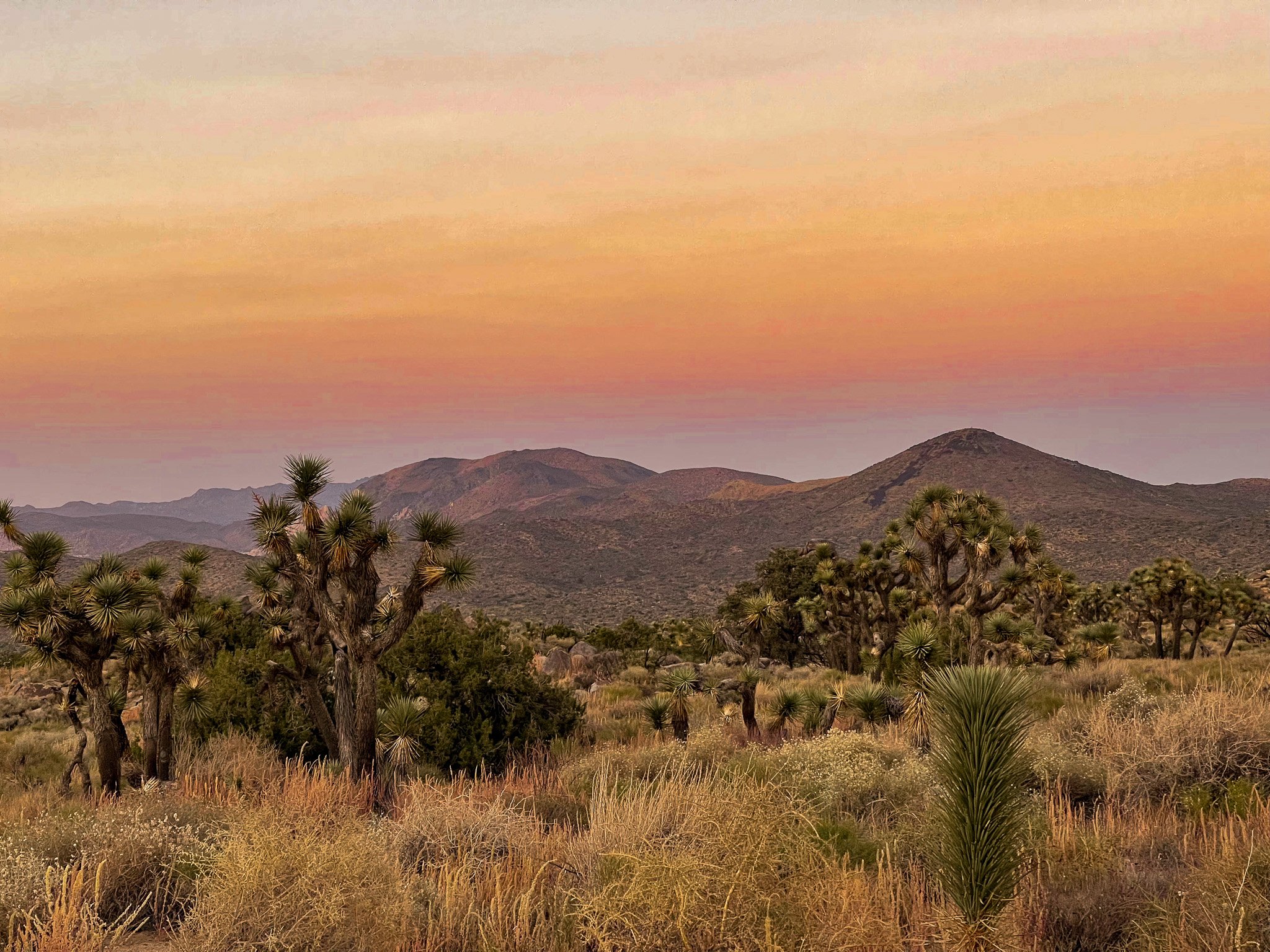
That’s what greeted me after hours of waiting at the top of Key’s View: a scenic overlook near the southwest part of Joshua Tree National Park. A long and winding roadway gets you to a circular parking lot, with a slightly steep walkway to an observation perch at the top of the hill. I got there early so I could set up my cameras and roll a Timelapse of the evening as it approached. I’ve been to Joshua Tree four times now, and the sunsets never disappoint.
There comes a moment where, just as the sun starts to dip below the mountains in the distance, hues of almost all kinds seem to jump out at you and color the landscape. Reds and oranges certainly, but yellows, blues, browns, and even shades of purple make the mountain range and the underlying Coachella Valley alive and vibrant. And just as soon as that moment arrives and you drink it in as much as possible… it starts to leave. Rainbows coalesce into oranges and reds, darkness starts to creep up from the valley floor to meet the sun at the top of the ridge, and just like that… evening starts to turn into night.
Driving back to the hotel, the warm desert breezes turn cool, and invite you to open your car windows and drink it in. You might even start to chill a bit as the desert environment sheds the heat and chilly air rustles through the Joshua tree branches and rock formations that form the area. Blue and grey shadows start turning to black, the trees rise up from the horizon and cast jagged silhouettes against the sky, as night continues to race across the ground.
Small taillights in front of you show the way forward; a 21st Century “wagon train” navigating the rocks and sand. An empty ranger station tells you to slow down, although no one is there to bid you farewell. At that point, night has firmly ensconced itself in the area and you are no longer in the park: the lights of the nearby town suddenly sparkle in the distance like a rolling carpet of stars. And while driving towards them reveal that they are not so much stardust as they are the local bar or fast food joint, you linger at the top of the hill, to try and keep the illusion alive. And then... you drive on.
Going the Extra Mile(s): Hiking the Grand Canyon’s South Rim
By Jake
Williams, Arizona might look like just another small town off I‑40, but for me it became the perfect basecamp: the “Gateway to the Grand Canyon.” From this small Arizona town, I set out on two days of hikes along the South Rim, experiencing sunrise vistas, quiet trails, and encounters with wildlife.
Day One: Sunrise at Mather Point
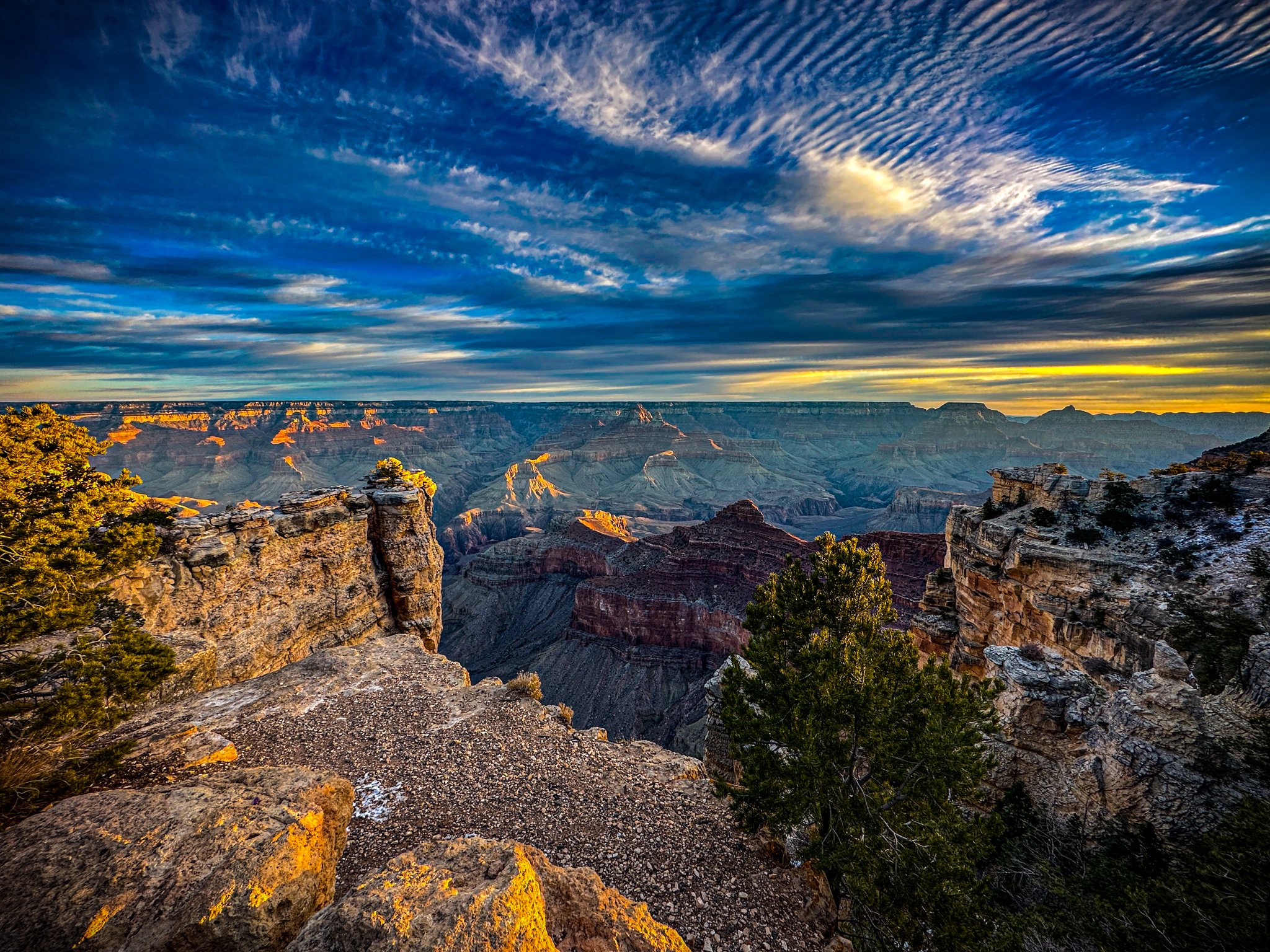
Arriving just before dawn, I hurried to Mather Point to catch the first light spreading across the canyon. The moment was worth every early‑morning shiver: the red and orange hues slowly lit up the buttes and cliffs.
From there, I set out on the Rim Trail east toward the South Kaibab trailhead. This 2.5‑mile stretch was peaceful, with few crowds and abundant wildlife. Small animals darted across the path and a herd of mule deer crossed casually just ahead of me. At South Kaibab, breathtaking vistas opened across the canyon before I turned back toward Mather Point to close out the day.
Quick Tips:
Arrive early for sunrise; parking fills fast.
Total hike out‑and‑back: ~5 miles.
Shuttle service available at South Kaibab if you’d rather not walk back.
Day Two: Rim Trail to Hermit’s Rest
The next morning I headed west along the Rim Trail. The first 2.5 miles are paved and gentle, passing landmarks like the Yavapai Geology Museum and the Trail of Time—a fascinating outdoor exhibit that traces millions of years of geologic history.
Passing through Grand Canyon Village, the trail winds around Lookout Studio, Kolb Studio, and after the village opens up to a series of overlooks including Maricopa, Powell, Hopi, and Mohave Points. Some sections skirt close to the edge, offering thrilling views straight down into the canyon and out across the Colorado River.
The final stretch, the Hermit’s Road Greenway Trail, leads 2.8 miles to Hermit’s Rest, a rustic stone building that makes the perfect end‑point for a long day on the rim.
Quick Tips:
Total hike length: ~11 miles one‑way (use the shuttle back).
Stop for views at Powell Point’s John Wesley Powell monument.
Carry water and watch footing on unpaved stretches.
Grateful Reflections
Across two days and ~16 miles, I gained more than photos: a renewed appreciation for the rangers who keep the park running, the wildlife that inhabits it, and the trails that make the canyon accessible. The Grand Canyon truly rewards those willing to go the extra miles.
Helpful Links: